
Overview
Frameless shower screens are precision-installed products designed to operate smoothly with consistent clearances between glass panels. In most cases, this alignment remains stable long-term.
However, in some instances and typically over an extended period of use, minor changes can occur which may result in the door making contact with an adjacent inline panel.
This document outlines the possible causes of this condition and how it is typically addressed.
Why Contact Can Occur Over Time
Although uncommon, glass-to-glass contact can develop due to a combination of small changes rather than a single failure. These may include:
- Minor building movement
All structures naturally move over time due to settlement, temperature changes, and material behaviour. Even very small movements can alter clearances in precision glass installations.
- Normal operational wear
Repeated opening and closing of the door can, over time, introduce slight changes in alignment.
- Hinge settling or glass movement within hinges
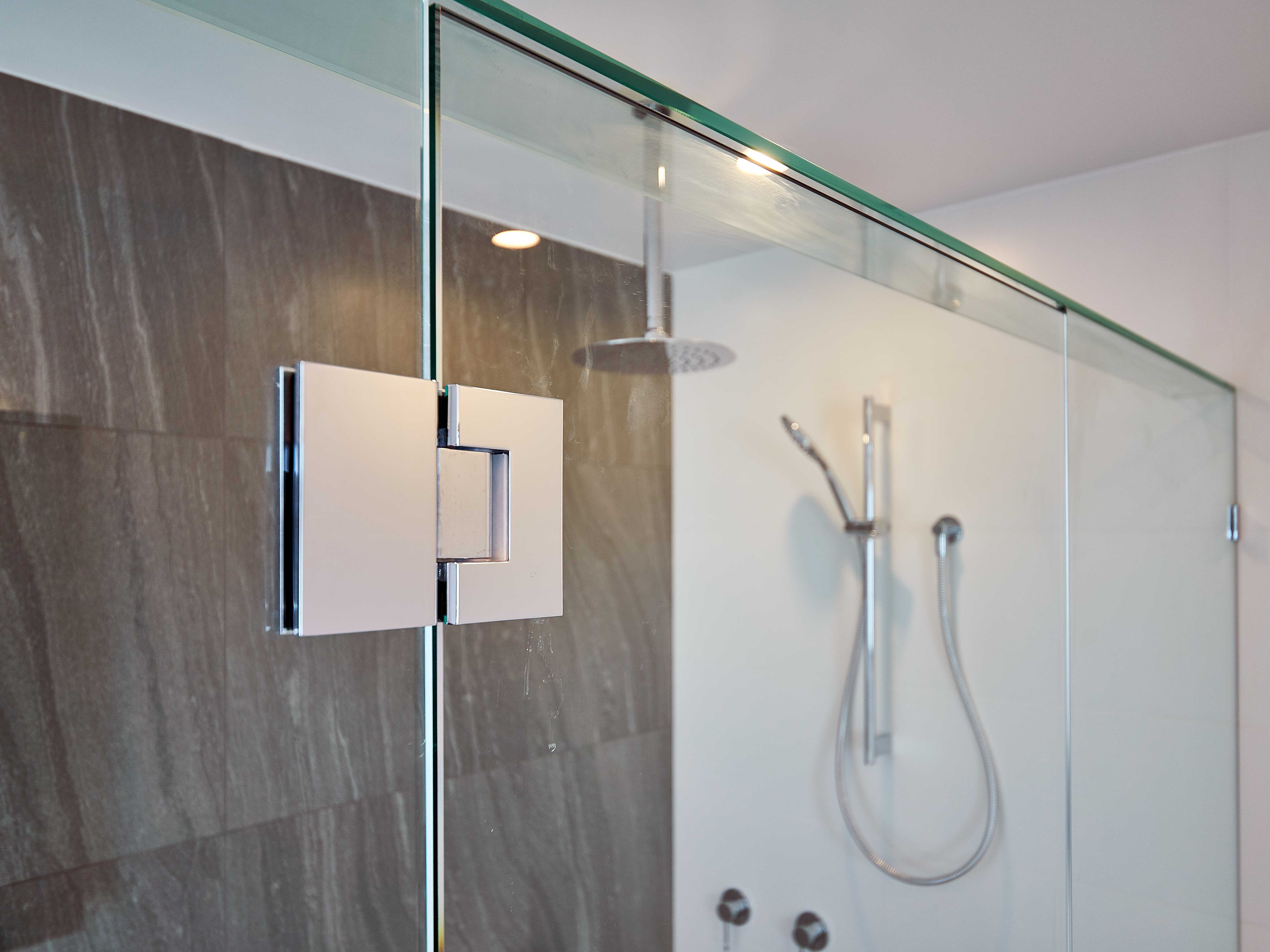
Frameless doors are secured using mechanical clamping hinges. Over time, and with regular use, there can be very slight movement of the glass within the hinge assembly or minor settling of components.
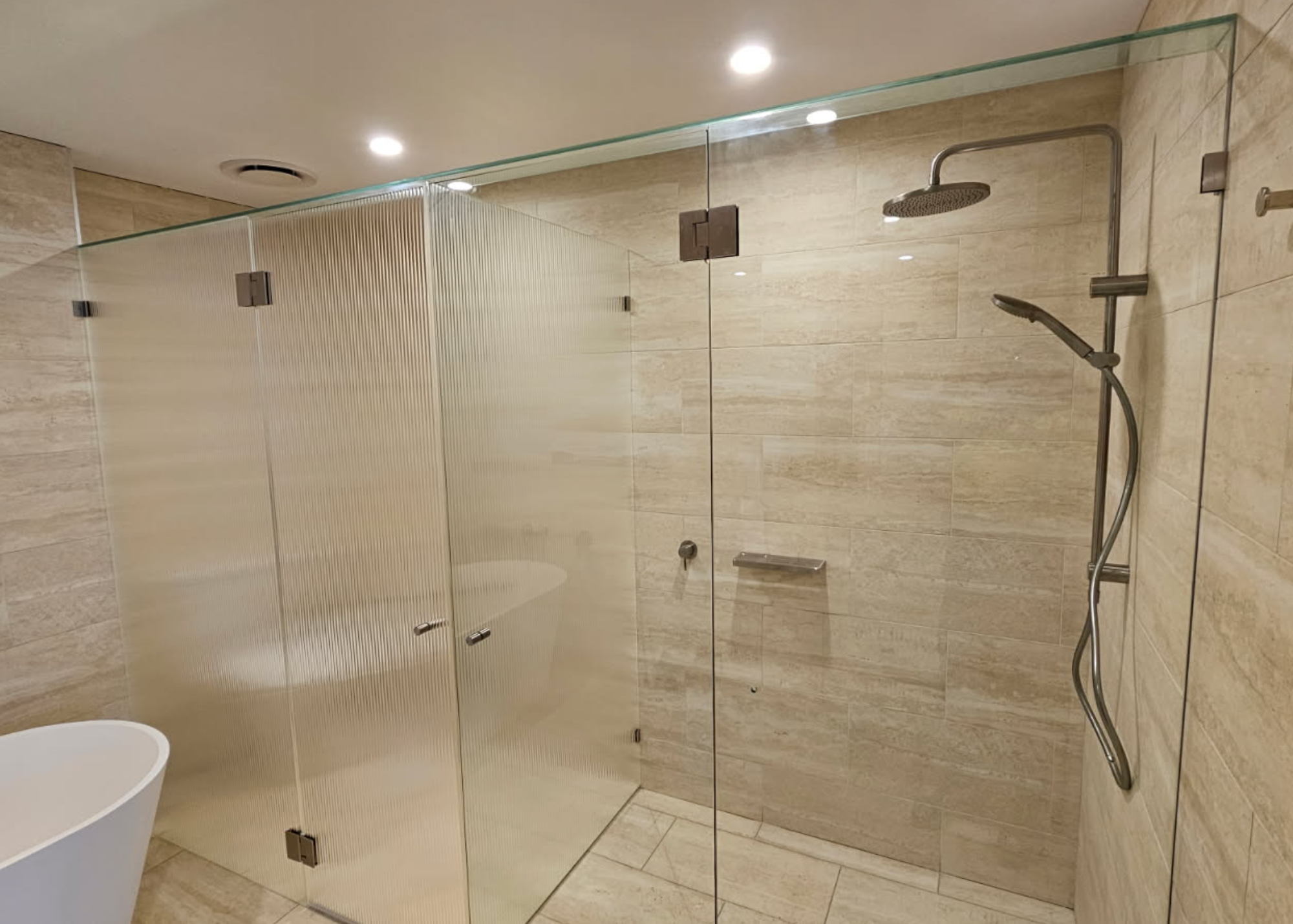
Individually these changes are minimal, but combined, they can reduce the original clearances and lead to light contact or rubbing between the door and inline panel.
Typical Behaviour
At installation:
- The door is aligned and operates freely
- Clearances between glass panels are set within specification
After a period of use:
- The door may begin to lightly touch or rub the adjacent panel
- Operation may feel slightly tighter or less consistent
This type of change generally develops gradually rather than suddenly.
Nature of the Issue
Where this condition arises over time, it is typically considered:
- A result of normal building and product movement
- A function of long-term use and settling of components
- Not indicative of defective materials or workmanship
Frameless systems, by design, have fine tolerances and do not incorporate flexible framing to absorb these minor changes.
Rectification
In most cases, the issue can be addressed through a straightforward service adjustment, such as:
- Hinge adjustment and realignment
- Resetting clearances within allowable tolerances
Where movement or change exceeds the available adjustment range, further rectification may be required. This can include:
- Reworking or resizing glass components to suit the adjusted opening
This is generally only necessary in less common situations where cumulative movement has altered the original geometry beyond what can be corrected through adjustment alone.
Service vs Warranty
Adjustments or modifications required due to movement, settling, or long-term use are considered maintenance/service items rather than a product fault.
Accordingly:
- These works are typically carried out as a service call
- They do not fall under warranty for defective materials or workmanship
Summary
- Glass-to-glass contact developing over time is not common, but can occur
- It is usually caused by minor cumulative changes, not a single defect
- Frameless systems are sensitive to small shifts in alignment
- The issue is generally easily rectified through adjustment
- In less common cases, further modification (including glass resizing) may be required
- Such works are considered routine service rather than warranty
Download printable version
For more information please get in touch!